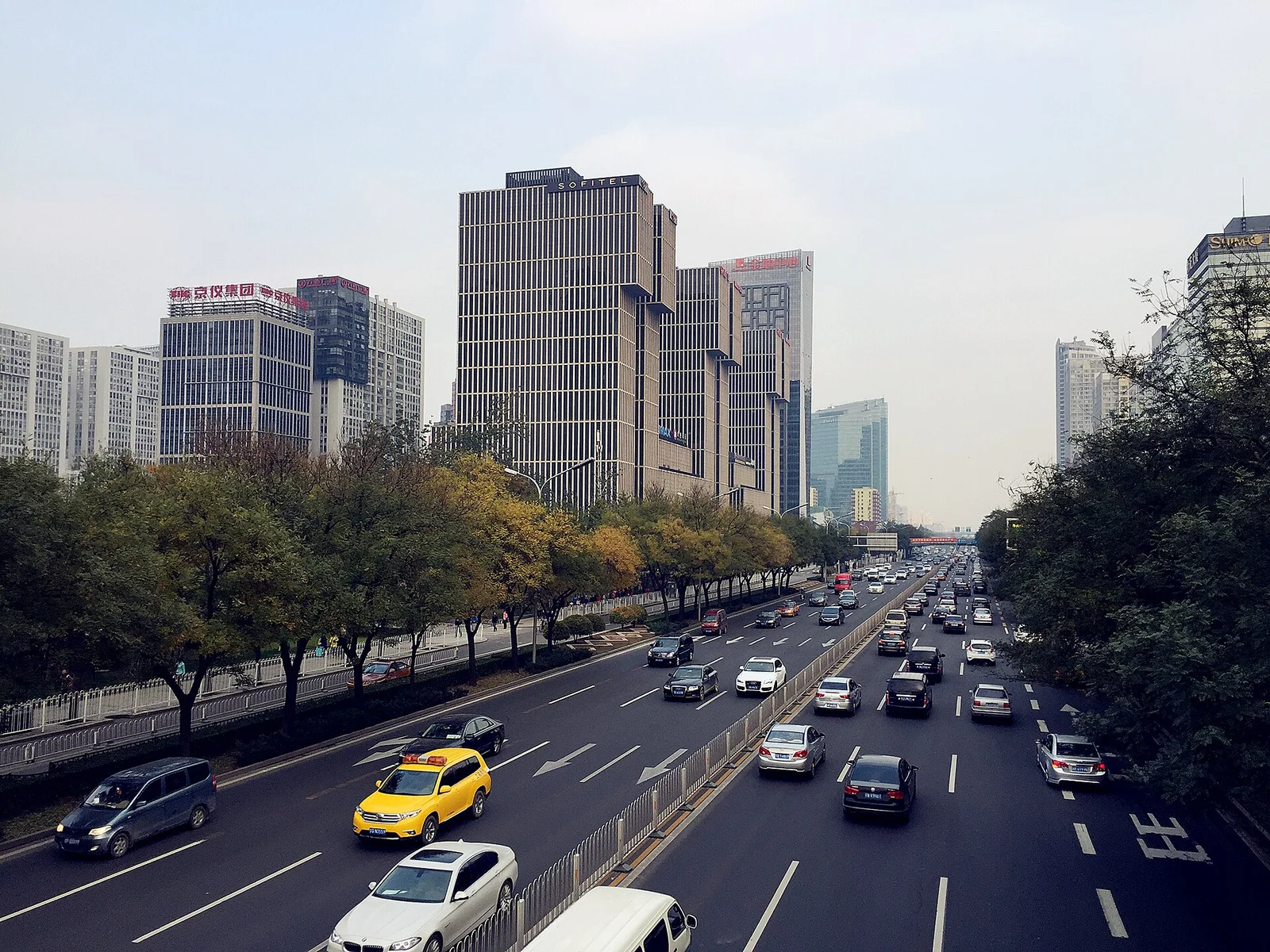
Eyesight Simulator
What farsighted vision looks like
A plus sign on your glasses prescription means you are farsighted. The eye has to focus harder than usual, at a distance and even more up close. Young eyes often manage it, so the blur shows up first when reading and later at a distance.
This is only a simulation. It is not an eye test and not a substitute for an eye exam. Please consult an optometrist or ophthalmologist about your eyes.
Prescription
Both eyes the same
Slider: −10 … +5 D. For a stronger prescription, type it in the box (−20 … +15 D).
← nearsighted / farsighted →
Farsighted: near work needs focusing effort.
Slider: −4 … 0 D. For a stronger prescription, type it in the box (−6 … 0 D).
0 = no astigmatism
No astigmatism entered.
AXIS has no effect when CYL is 0.
Focusing range shrinks with age; it matters most up close.
Examples
Pure sphere: sets SPH and clears CYL and ADD.
Advanced
Pupil
Here the "with glasses" side is fully corrected for the distance shown. The "without glasses" side relies only on the eye’s own focusing at your age.
Saved only in this browser. Nothing is uploaded.
Reading · phone at 35 cm
What your numbers mean
Your sphere, cylinder and axis describe the power and direction of your lenses.
- Sphere
- +2.00 D
Farsighted
- Blur starts beyond about
- None without focusing effort
Without glasses, eye not focusing. With astigmatism there are two reference values, and near things may also blur.
- Type
- Farsighted
These distances assume the eye is not focusing
- Summary power
- +2.00 D
Worked out with the signs: SPH + CYL ÷ 2. It only summarizes the numbers; the blur may differ.
Exactly +2.00 D
Why age decides what you see
Farsightedness is different from nearsightedness in one important way: the eye can partly fix it on its own by focusing (accommodation). How much it can fix depends on age, because the focusing range shrinks over the years.
The eye can focus less as it gets older. The simulator estimates how much focusing an eye of each age can keep up comfortably, from a standard average by age. For the ages on the age buttons that is about:
| Age | Focusing the model allows |
|---|---|
| 8 | 6.00 D |
| 30 | 4.75 D |
| 45 | 2.50 D |
| 60 | 0.25 D |
A farsighted eye spends part of that on distance (as much as its SPH) and needs about 2.86 D more for a phone at 35 cm. When the total is more than the eye can give, the rest shows up as blur. These are model estimates; real eyes vary a lot.
What each level looks like
Each cell is what the simulator shows without glasses for a phone at 35 cm and a street far away. "Clear" means the eye can focus through it, but it is working the whole time.
| SPH | Age 8 | Age 30 | Age 45 | Age 60 |
|---|---|---|---|---|
| +1.00 | Clear | Clear | Phone blurs | Phone and street blur |
| +2.00 | Clear | Phone just starts to blur | Phone blurs | Phone and street blur |
| +3.00 | Clear | Phone blurs | Phone and street blur | Phone and street blur |
| +4.00 | Phone blurs slightly | Phone blurs | Phone and street blur | Phone and street blur |
| +6.00 | Phone blurs | Phone and street blur | Phone and street blur | Phone and street blur |
+1.00 diopters
Up to middle age, the eye usually covers this without help, so the simulator shows a clear phone and street. At 45 the phone softens, about 1.36 D short. At 60 the street softens too.
+2.00 diopters
At 30 the phone is right at the limit in the model: it just starts to blur, and long reading can be tiring. At 45 the phone is about 2.36 D out of focus; the street is still clear.
+3.00 diopters
At 30 the phone blurs, about 1.11 D short, while the street stays clear. By 45 the eye can no longer cover the distance part either, so the street softens as well.
+4.00 diopters
Even at 8 the model shows a slightly soft phone. At 30 the phone is clearly blurred; the street is clear. From 45 on, both blur.
+6.00 diopters
At 8 the street is still clear but the phone blurs. From 30 on, the eye cannot focus through it at any distance, so the street and the page both blur.
Why a farsighted eye can look fine on a street
Light from far away should land on the retina when the eye is relaxed. In a farsighted eye it would land behind the retina, and the eye pulls it forward by focusing, the same effort everyone uses to read. So a farsighted person may see far away clearly, and only notice the extra effort, or the blur, up close. Nearsightedness works the other way; compare them side by side in nearsighted vs farsighted.
Farsighted or presbyopia?
Both make close work harder. Farsightedness comes from the shape of the eye and shows up as a plus SPH. Presbyopia is the lens getting less flexible with age, usually noticed after 45, and shows up as an ADD for reading. Many people have both. See how to read the SPH and ADD on a prescription.
What the simulator leaves out
- Effort is not shown. "Clear" in the simulator can still mean tired eyes or headaches after long reading. A screen cannot show strain.
- Short bursts can be sharper. The model uses the focusing an eye can keep up, about half the maximum. A quick glance can focus more.
- Ages are averages. Focusing range varies a lot between people of the same age.
- Diffraction, aberrations and the brain's adaptation are ignored, as on every page of this site; see the method notes.
Questions
Is +2.00 bad?
It depends on age. In the model, a typical eye covers +2.00 for distance and reading in youth, and reading starts to blur in the 40s. How it feels is personal; an eye exam tells you what your eyes need.
Why do I need reading glasses if I am farsighted?
Reading needs extra focusing on top of what a farsighted eye already spends on distance. When the focusing range shrinks with age, close-up reading is the first thing that runs out.
Does farsightedness go away?
In children, mild farsightedness often lessens as the eye grows. In adults the eye no longer grows, and farsightedness tends to become more noticeable with age.
What does the plus sign on a prescription mean?
Plus means the glasses lens is a converging lens, used for farsightedness. Minus means nearsightedness. See how to read an eye prescription.
Can children be farsighted?
Yes. Many children are farsighted without blurry vision, because their lens focuses easily. Severe farsightedness in children can raise the risk of crossed eyes or a lazy eye; if you notice signs such as trouble with reading or an eye that turns in, see an optometrist or ophthalmologist.
This is only a simulation, not a substitute for an eye exam. For your own eyes, consult an optometrist or ophthalmologist.
Sources (checked 2026-10-23)
- National Eye Institute. Farsightedness (hyperopia). https://www.nei.nih.gov/eye-health-information/eye-conditions-and-diseases/farsightedness-hyperopia — eyeball too short; trouble seeing up close, eye strain, headaches; mild cases may have no symptoms; severe farsightedness in children and crossed eyes or amblyopia.
- American Academy of Ophthalmology. Hyperopia (farsightedness). https://www.aao.org/eye-health/diseases/hyperopia-farsightedness — most children are farsighted without blurry vision; flexible lens; mild farsightedness reduced or eliminated as the eye grows.
- National Eye Institute. Presbyopia. https://www.nei.nih.gov/eye-health-information/eye-conditions-and-diseases/presbyopia — lens gets harder and less flexible; usually after age 45.
- Model numbers: the focusing an eye can keep up is half of Hofstetter's average maximum for its age (18.5 − 0.3 × age diopters, capped at 12 D). Seeing far takes as much focusing as the farsighted power; reading a phone at 35 cm takes 2.86 D more. See how the simulator works.
Popular farsighted levels
Compare the same phone text at 35 cm from 0.00 to +5.00 D, at age 45.
Swipe for more →
Phone text about 2 mm tall, 35 cm away.
This is only a simulation. It is not an eye test and not a substitute for an eye exam. Please consult an optometrist or ophthalmologist about your eyes.